In the high-velocity environment of professional motorsport, a livery is far more than a coat of paint. It is a technical visual identity system that must perform under the glare of stadium floodlights, the scrutiny of 4K broadcast cameras, and the relentless speed of the racetrack. At Spindrift, we specialise in the engineering phase of livery design, delivering the precise 2D vector blueprints required by elite wrap and paint teams.

At Spindrift Motorsport, we don't just create "cool graphics." We engineer functional, high-impact liveries that prioritise sponsor clarity and brand authority.

1. The Blueprinting Process: Precision Over Guesswork

While 3D mock-ups are useful for social media "hype," they can often hide the technical realities of a car’s bodywork. At Spindrift, we utilise a rigorous rendering process that provides a definitive blueprint for your wrap or paint team. Explore how we apply this to our professional racing livery designs.

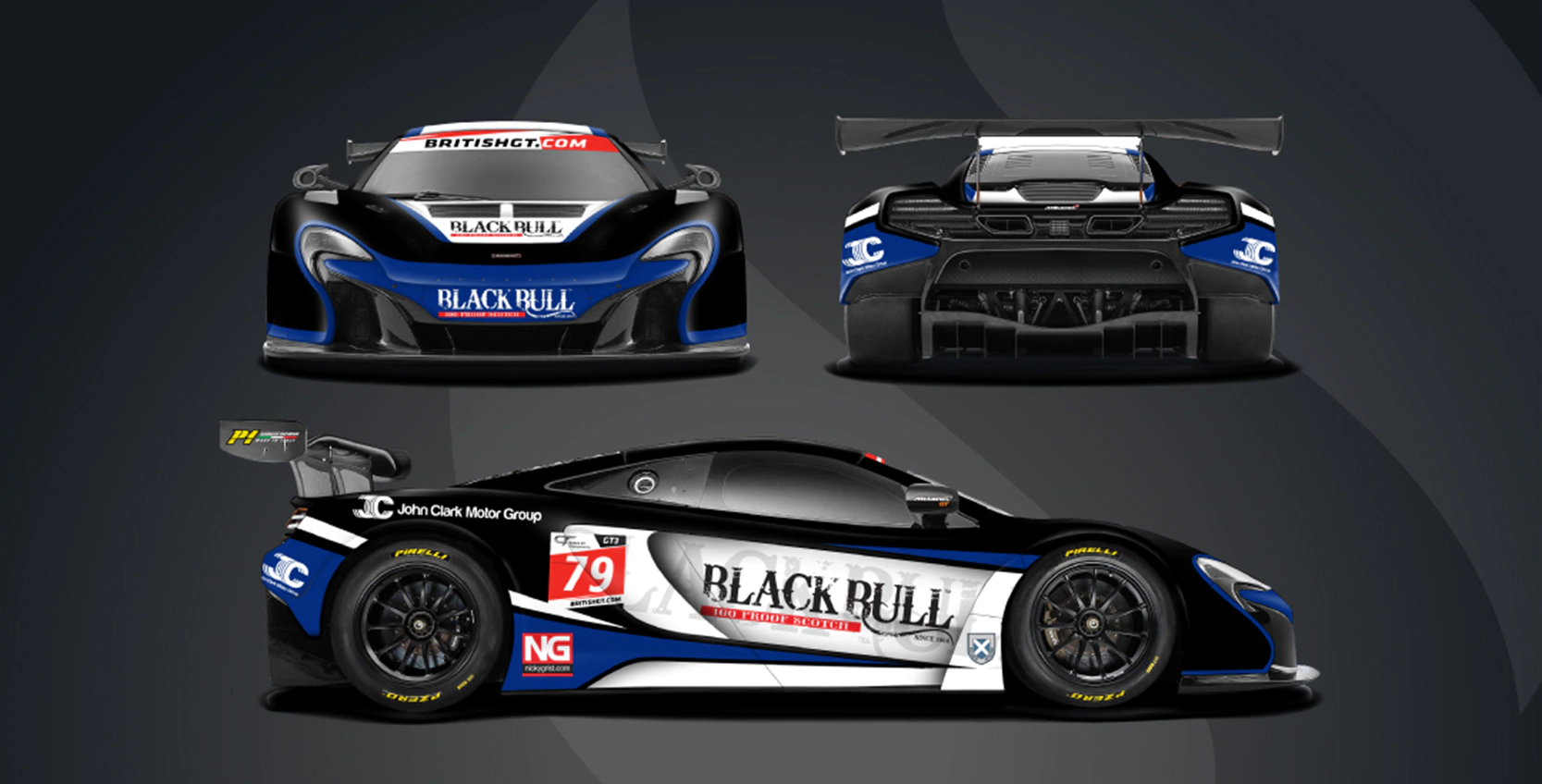
Our high-fidelity professional renderings cover five precise elevations:

  • Left & Right Profiles
    For primary sponsor dominance in "TV Zones."

  • Front Elevation
    Critical for head-on media shots and rearview mirror intimidation.

  • Rear Elevation
    Maximising visibility during on-board "follow" shots.

  • Plan (Top) View
    Essential for aerial drone coverage and pit-lane recognition.

By designing with this level of detail, we ensure that every line, vent, and sponsor logo is mapped exactly where it needs to be, removing the guesswork and high labour costs often associated with ill-prepared designs.

Custom British GT racing livery design for the Ecurie Ecosse McLaren 650S GT3, featuring Black Bull sponsorship for drivers Rob Bell and Alasdair McCaig, designed by Spindrift.

Technical Media Compatibility: 3M vs. Avery Dennison

A successful livery transition from screen to track depends on the media selection. We design with the physical properties of elite cast vinyls in mind to ensure our geometric patterns translate perfectly to the car's bodywork:

  • 3M 2080 / Controltac™: This is often the preferred choice for endurance racing due to its thickness and scratch resistance. Its Controltac™ adhesive is ideal for complex, multi-layered liveries where repositioning of sponsor logos is required during the application process.

  • Avery Dennison SW900 / Easy Apply™ RS: Because it is slightly thinner and more conformable, we frequently recommend this for cars with aggressive aerodynamic venting. The Easy Apply™ RS technology allows for a bubble-free finish on complex compound curves found on modern GT3 and prototype chassis.

Weight Management & Efficiency:
In elite competition, every gram counts. We prioritise 2D vector-cut vinyl over full-body wraps where possible. This allows for rapid panel replacement during race weekends and minimises the total material weight on the chassis - a critical factor for GT3 and LMDh performance.

The Spindrift Workflow:
We provide high-resolution vector files optimised for professional wrap shops. We are happy to liaise directly with your installation team to adjust file specifications - including specific bleed requirements - to match their preferred vinyl media and application technique.

Our livery systems are designed to integrate seamlessly with your wider Motorsport Graphic Design and sponsorship assets, ensuring brand consistency from the car to the paddock.

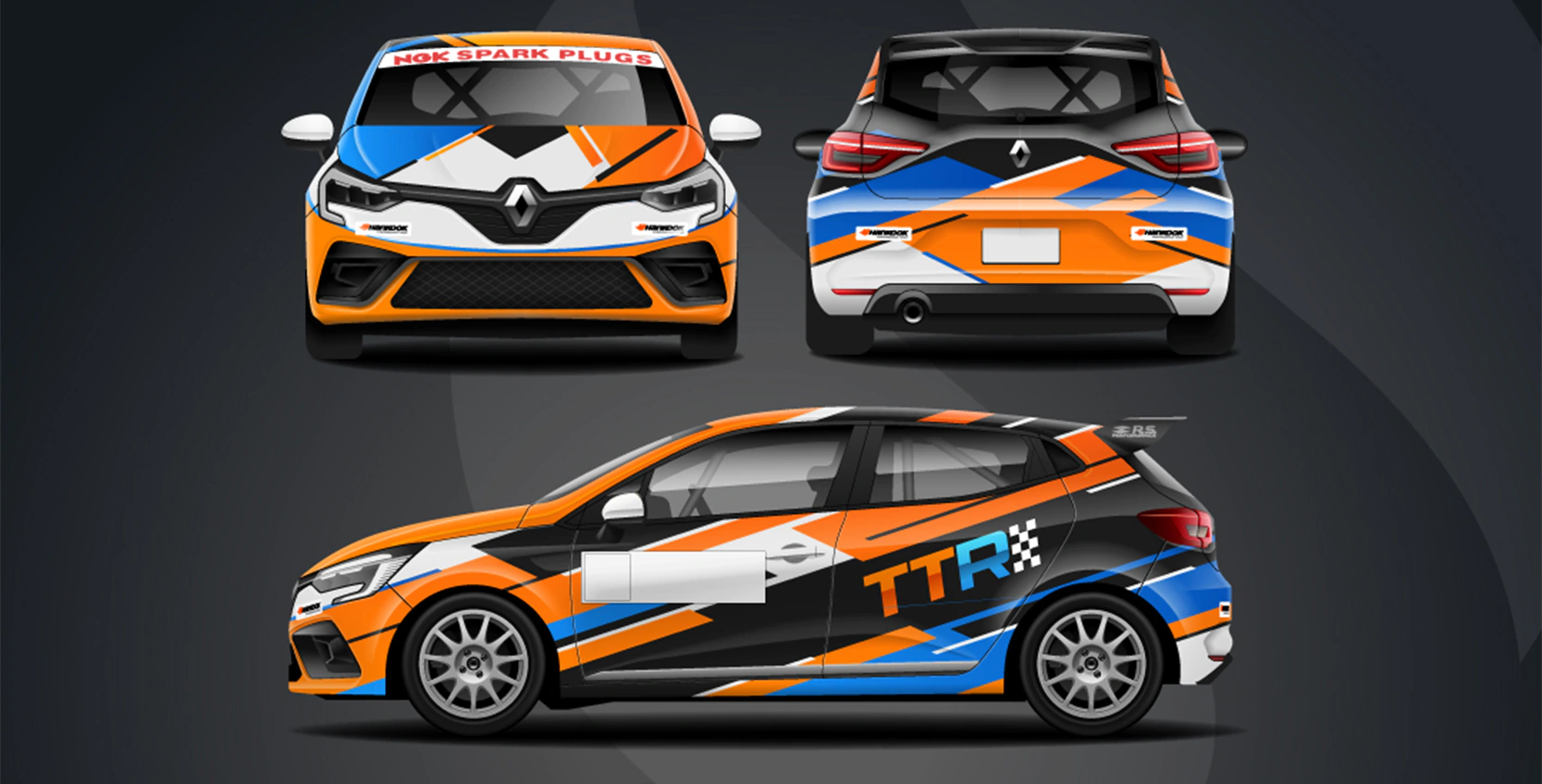
Custom racing livery design & vector illustration for the Track Time Racing (TTR) Renault Clio Gen 5, designed by Spindrift.

2. Strategic Sponsor Hierarchy

A race car moves too fast for a "busy" design. We work with our clients to establish a clear hierarchy of logos. By identifying the primary "TV Zones" of the specific chassis - whether it’s a GT3, LMP3, or single-seater car - we ensure your title partners receive the maximum return on their investment.

3. Proven on the World’s Most Iconic Grids

Our livery designs have defined the look of championship-winning teams and legendary automotive tributes. Our portfolio includes:

  • McLaren Automotive (P1 GTR James Hunt Edition)
    We were commissioned to design the one-off livery for the McLaren P1 GTR, celebrating the 40th anniversary of James Hunt’s F1 World Championship.

  • Garage 59 (McLaren 650S GT3)
    We designed the "Bruce McLaren" tribute livery for the #60 Garage 59 entrant at the 24 Hours of Spa - a design that honoured the 50th anniversary of the original "Speedy Kiwi" logo.

  • Garage 59 (2016 Blancpain Endurance Champions)
    We provided the visual identity for the #58 McLaren 650S GT3, which powered Rob Bell, Côme Ledogar, and Shane van Gisbergen to the 2016 Blancpain GT Series titles.

  • Track Time Racing (Renault Clio Gen 5)
    For the Dubai-based TTR squad, we created an aggressive, geometric race car livery that successfully integrated the team’s vibrant orange and blue identity across their fleet of Clio Cup machinery.

  • Nine-W Motorsport (Logistics Branding)
    While their historic F1 and GT machinery retain their iconic period-correct liveries, we were tasked with designing the team’s high-impact transporter branding - ensuring the "Support Fleet" carries the same level of authority and prestige as the cars it carries, both on the roads and in the paddock.

See our full gallery of premium racing liveries for more examples of our championship-winning work.

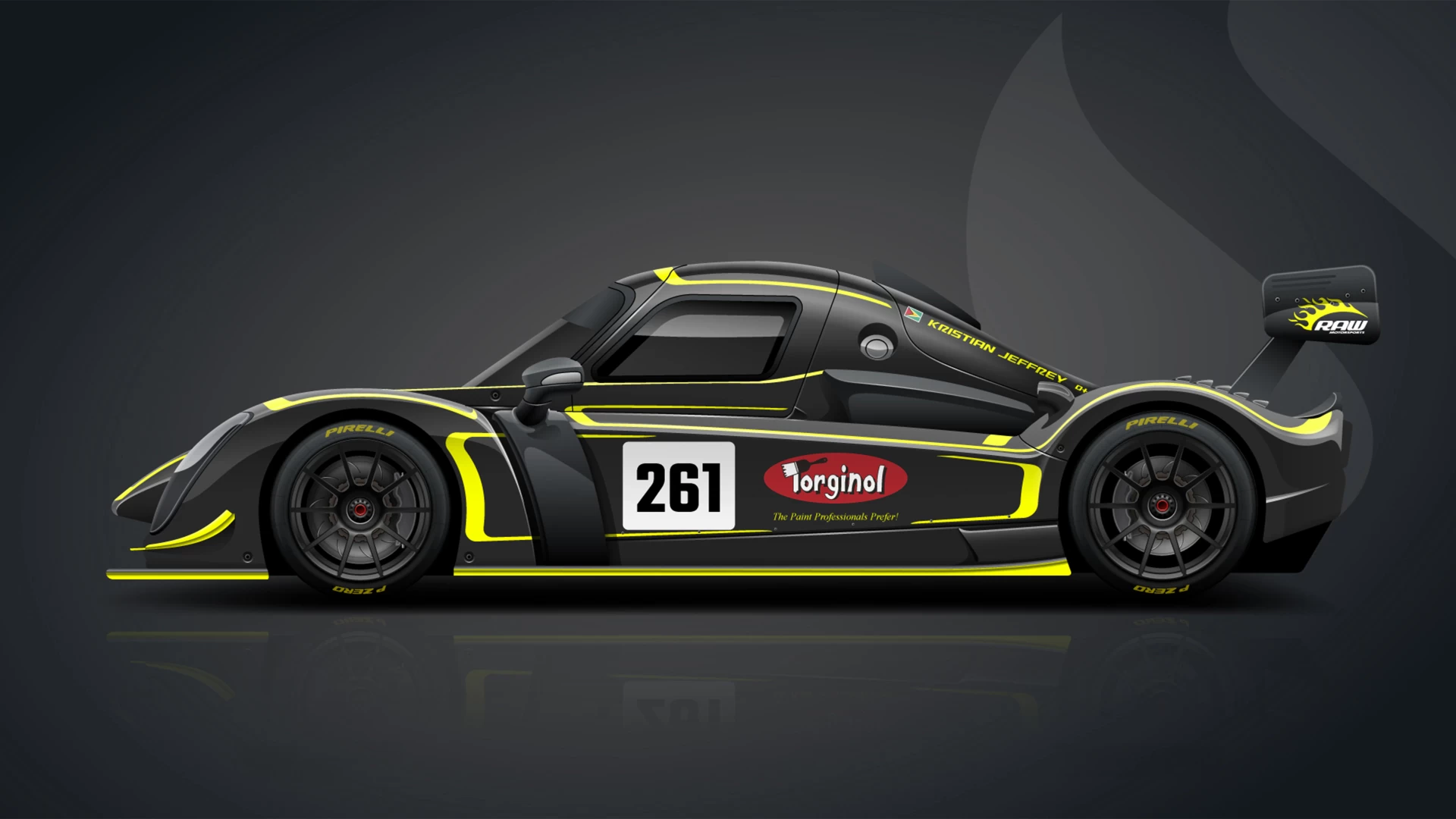
Bespoke Radical RXC GT3 race car livery design and technical elevation guide for Kristian Jeffrey - Spindrift motorsport design.

4. Technical Handover: From Concept to Grid

The best design in the world is useless if it cannot be executed. We provide our clients with guaranteed production-ready artwork. This includes specific colour references and technical blueprints that allow wrap technicians to work with absolute precision, ensuring the final physical car is an exact match of the approved digital concept.

FAQs: Race Car Livery Design

Designing a high-impact racing livery involves a balance of technical precision, brand strategy, and aesthetic flair. Below, we answer the most common questions regarding our professional design process and the technical standards required for modern motorsport.

What is the best software to design a race car livery?

For professional-grade motorsport design, Adobe Illustrator is the industry standard. Unlike raster-based programs like Photoshop, Illustrator uses vector graphics, which allows livery designs to be scaled to any size - from a 1:18 scale model to a full-size Le Mans Prototype - without any loss of resolution or clarity.

While some designers use 3D software like Blender or Autodesk Maya for visualisation, the final production files sent to the vinyl installers must be flat, technical vector blueprints. At Spindrift, we create and utilise bespoke 5-view vector templates to ensure that every sponsor logo and geometric line aligns perfectly across the complex aerodynamic surfaces of the car.

How long does it take to design a professional racing livery?

The timeline typically ranges from a few days to several weeks, depending on the complexity and the level of sponsor integration required. We work through rigorous rounds of concepts and technical revisions to ensure the final design meets the team’s identity and the strict visibility requirements of every commercial partner.

Why choose a technical designer over a standard wrap shop?

A professional motorsport designer understands the balance between on-track visibility, brand hierarchy, and technical constraints. We don't just create a "look"; we strategically engineer sponsor placement for maximum exposure in 4K broadcast coverage and high-speed photography. Furthermore, we ensure the design respects the car's complex aerodynamics and FIA regulation zones—details frequently overlooked by generalist wrap shops.

What is the difference between a racing livery and a race car wrap?

The livery is the creative and strategic design concept - the arrangement of colours, logos, and graphics that form your brand identity. The wrap is the physical high-performance vinyl material and the installation process. Crucially, for elite competition, we prioritise 2D vector-cut vinyl over full-body wraps to minimise vehicle weight and allow for rapid panel replacement during a race weekend.

Do you provide 3D renders or 2D technical blueprints?

We specialise in high-fidelity 2D technical elevations. While 3D renders offer a stylised view for presentations, 2D vector blueprint renderings are the only format that allows for the mathematical precision required by professional paint and wrap teams. Our 2D process includes geometric distortion correction, ensuring that graphics appear perfectly linear once applied to the complex compound curves of a modern racing chassis.

Conclusion: Defining Your Standard

Your livery is the most visible marketing asset your team owns. If you are ready to move beyond "wraps" and start building an iconic racing identity, Spindrift Motorsport is your technical partner.

Ready to command the grid? Discover the Spindrift Race Car Livery Design Portfolio or contact us to discuss your identity this season.

From Concept Rendering to Grid Reality

A championship-winning livery must balance aesthetic impact with technical precision. See how our design systems support global teams across F1, GT, and Prototype racing.

Define Your Championship Identity

From GT3 and BTCC to F1, a professional motorsport livery must balance technical precision with commercial visibility. Contact our design team to start the elevation process for your next racing livery project.
Name
Email Address
Message